
July 13, 2026
The Lifecycle of an Item: From Purchase to Storage to Disposal
There's a moment when you bring something new into your home. It's full of potential. You know exactly why it's there, what it does, where it might go. You can picture it fitting perfectly into your life.
Then time passes.
Months later, you're searching for that item and can't find it. Or you find it but have forgotten why you bought it. Or you discover you own three of them. The journey that began with such clarity somehow got lost along the way.
This is the unspoken problem with how most of us think about possessions: we focus on the purchase, but we ignore the journey that follows. We treat items as static objects. In reality, every single thing in your home has a complete lifecycle: a trajectory from acquisition through utility to eventual disposal.
And the moment you start tracking that lifecycle with intention, everything changes.
The Five Stages Every Item Travels Through
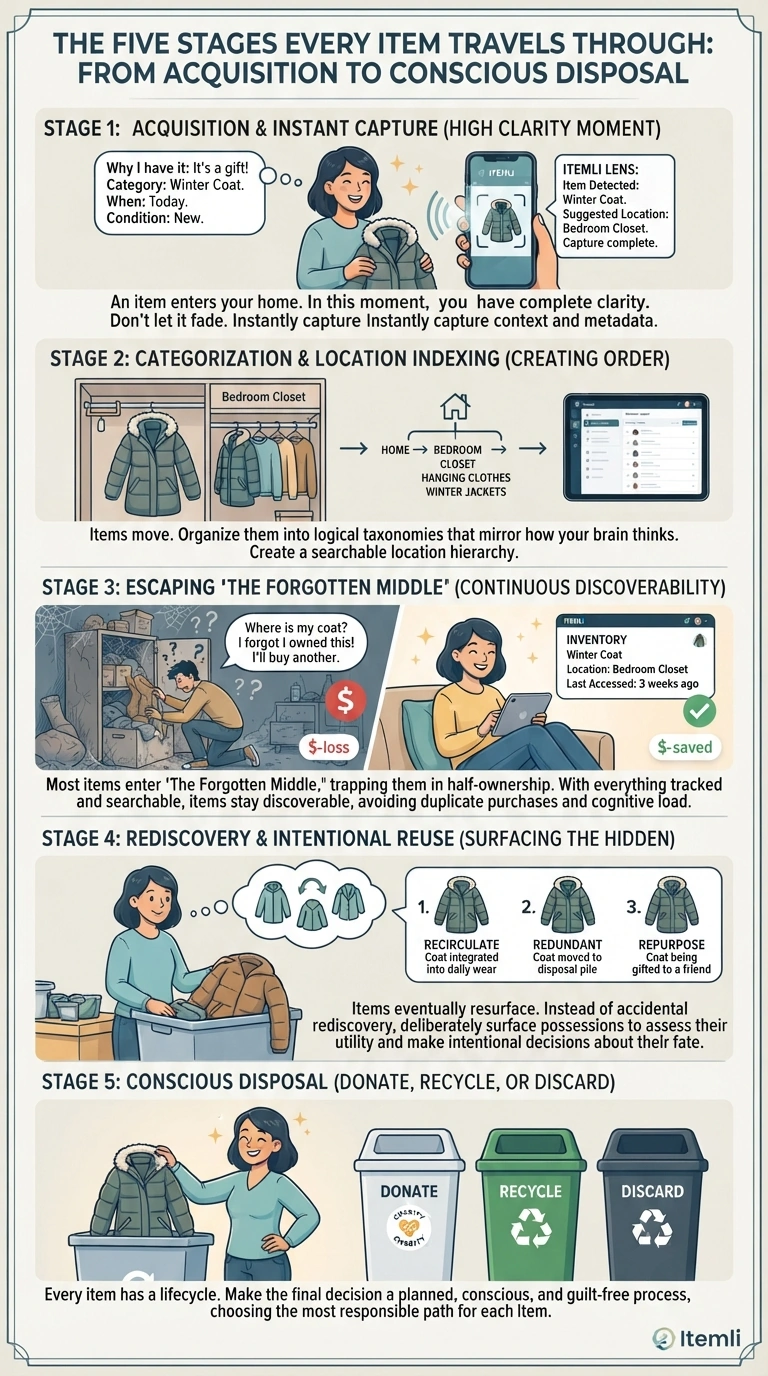
Understanding the lifecycle of an item means recognizing the five distinct phases every possession moves through:
Stage 1: Acquisition & Instant Capture
An item enters your home for a reason. You bought a winter coat because the seasons were changing. You purchased organizers because a drawer needed structure. You received a gift because someone wanted to mark an occasion. In this first moment, you have complete clarity about why you have it, what category it belongs to, when you acquired it, and what condition it's in.
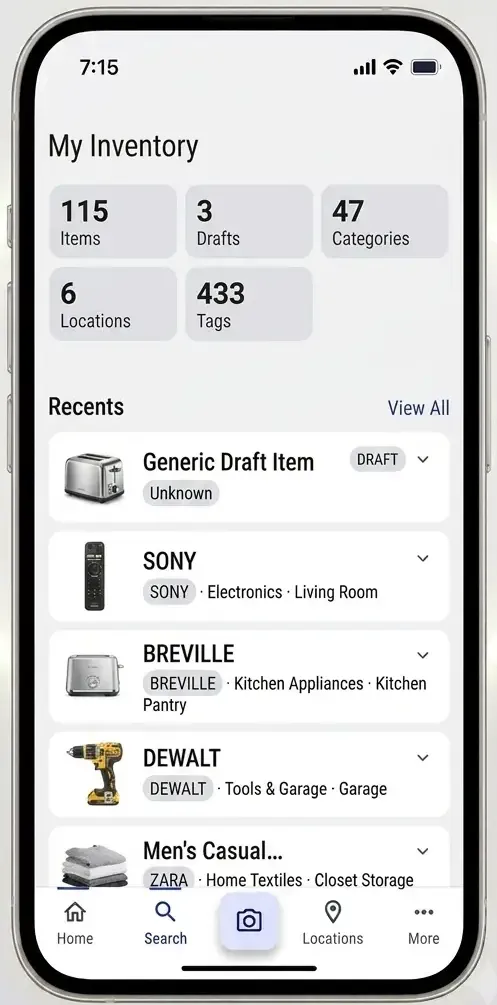
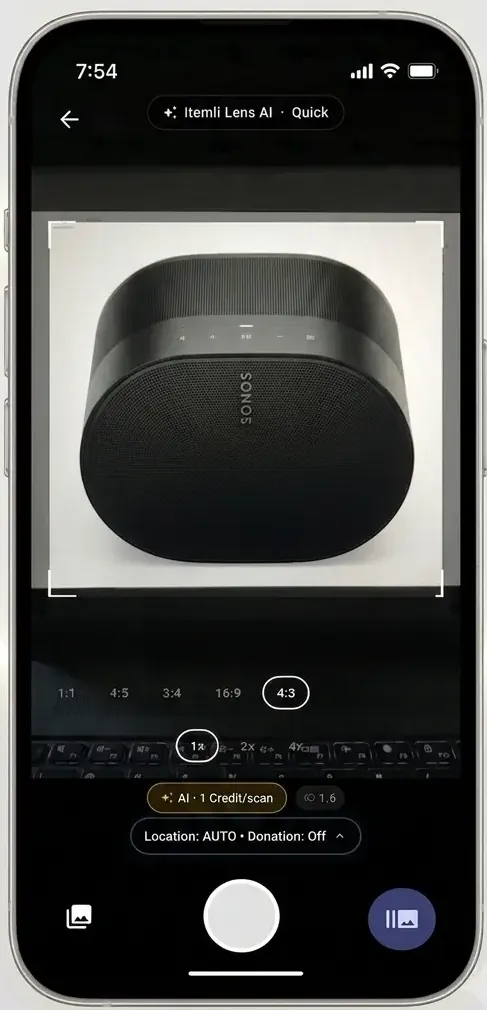
This is the high-clarity moment, and it's fragile. Most people never capture this knowledge. They assume they'll remember, but memory is unreliable. Without a system, this crucial context is already beginning to fade. But the moment you place something in storage, you simply photograph it with your phone. The AI instantly recognizes what you're photographing and suggests categories and locations, capturing the high-clarity moment (your knowledge of why you acquired it and where it goes) before that clarity begins to fade. What used to take manual logging now happens in seconds.
Stage 2: Categorization & Location Indexing
Next comes the task of putting the item somewhere. You don't think about this as "categorization". You just find a spot. The winter coat goes in the closet. The organizers go in the drawer. The gift goes on a shelf. For most of us, items end up in places that make sense "for now", and that "for now" becomes "forever."
The problem deepens when items move. You reorganize a closet and relocate your winter coat to another storage area. The organizers get repurposed for something else. The gift gets moved to make room for something new. Each time, the item's location becomes less discoverable, more hidden. Without a system that tracks these movements, you quickly lose track entirely. The item is still in your home, but you no longer know where it is.
AI solves this by suggesting logical taxonomies based on what it recognizes. Winter clothes go together. Kitchen tools cluster with other kitchen tools. Office supplies organize into clear subdivisions. The system creates a searchable location hierarchy: Home → Bedroom → Closet → Hanging Clothes → Winter Jackets. This isn't just metadata—it aligns with how your brain naturally navigates physical space. You can instantly search "where did I put my winter coat?" and navigate to it like you would navigate to a room in your house. Because items are organized this way, the forgotten middle never happens. Items stay continuously discoverable.
Stage 3: Escaping "The Forgotten Middle"
This is the longest stage of an item's lifecycle, and the most psychologically damaging. The item sits in your home, out of sight and out of mind. You've forgotten you own it. Or you remember vaguely, but have no idea where it is. Without knowledge of what you already own, you make terrible decisions: you buy a second winter coat because you forgot the first one exists, you repurchase tools you already own, you fill your pantry with items you've already stocked. Items sit unused because you don't remember they're there. That gift never gets enjoyed. The organizers never solve the problem they were meant to solve. Over time, your home fills with a growing collection of forgotten items. The clutter deepens, the cognitive load increases, and you feel increasingly out of control. Storage space that could be used productively is consumed by items you've lost track of. Financial resources tied up in forgotten purchases never get realized.
This middle stage is where most modern homes spend the majority of their lifecycle energy. Items are trapped in a state of half-ownership: physically present but psychologically absent. But with everything tracked and searchable, the forgotten middle never happens. Items are continuously discoverable. You can instantly find what you need, avoiding duplicate purchases before they happen. You know exactly what you own, so every new purchase decision is made with confidence. The cognitive load of living surrounded by invisible items disappears. Your home no longer feels chaotic because every possession is accounted for and accessible.
Stage 4: Rediscovery & Intentional Reuse
If you're lucky, an item eventually resurfaces. You're cleaning out a closet or reorganizing a shelf, and suddenly, there it is. The winter coat you forgot you owned. The organizers that could still solve a problem. The gift you never properly appreciated.
In this moment, you have a choice:
- Put it back into circulation: You realize it's actually useful and integrate it into your daily life or current needs.
- Recognize it as redundant: You already have something better or more appropriate, so this item becomes a candidate for disposal.
- Appreciate it differently: You see the item with fresh eyes and decide to repurpose it or gift it to someone who could use it.
But this rediscovery is inefficient and incomplete. Most items never get rediscovered. They stay hidden until you move or do a deep clean. By then, years have passed.
A tracking system eliminates this inefficiency. Instead of stumbling upon items by accident, you can deliberately surface forgotten possessions, assess their utility, and make intentional decisions about their fate.
Stage 5: Conscious Disposal (Donate, Recycle, or Discard)
Every item eventually reaches the end of its useful life for you. It's broken, outdated, or simply no longer serves your needs. You have ethical choices: donate it so someone else can use it, recycle its materials, or responsibly discard it. But most items never reach this stage consciously. Instead, they're abandoned in storage, forgotten and ignored until a forced move or renovation forces the issue. Only then do you realize how much you've accumulated and how many decisions you've deferred.
When building Itemli, we realized that decluttering fails when it feels like a high-friction chore. By tracking an item's lifecycle from day one, giving something a deliberate, guilt-free exit becomes effortless. You can periodically review your inventory and make deliberate decisions about utilization and disposal. Instead of rediscovery being an accident, it becomes a planned process. You ask: "Do I still need this?" You assess condition, utility, and alignment with your current life. Then you decide: keep, repurpose, donate, or recycle. Each decision is conscious and intentional.
Why the Forgotten Middle Destroys Both Wealth and Wellbeing
The tragedy of Stage 3 (the forgotten middle) is that it's entirely avoidable. Most people don't realize how much economic and psychological damage they're absorbing by losing track of their possessions.
Consider the math of a typical household:
- Average American household has 300,000+ items
- The average person loses track of 12% of their possessions within a year of acquisition
- Micro-leaks from duplicate tools, pantry double-buys, and unreturned items quietly drain $500 to $1,500 from the average family budget every year
- Storage space consumed by forgotten items costs in both real estate and opportunity cost
But the cost isn't just financial. The psychological weight of living surrounded by items you've lost track of is significant:
- Cognitive load: Your brain is processing unseen chaos, even if you're not consciously aware of it.
- Anxiety: You feel perpetually out of control in your own space.
- Decision fatigue: Every purchase decision is made without confidence that you don't already own the item.
- Environmental guilt: You eventually realize you've wasted resources on things you never used.
The forgotten middle doesn't just cost money. It costs peace of mind.
The Profound Shift: From Passive Ownership to Active Stewardship
Perhaps the deepest shift that happens when you intentionally track your item lifecycle is psychological: you move from passive ownership to active stewardship.
In passive ownership, items happen to you. They accumulate. You lose track of them. They sit unused and forgotten. You experience vague guilt about waste, but you're never quite sure what you're feeling guilty about.
In active stewardship, you know what you own. You understand why you own it. You can see its current state and utility. When the time comes to let something go, it's a conscious decision, not a resignation to chaos.
This shift has ripple effects:
- You make more intentional purchase decisions because you know what you already have.
- You buy with quality in mind, knowing you'll track the item through its entire lifecycle.
- You experience genuine satisfaction when you find and use items you own.
- You feel less guilt about disposal because you've consciously considered each item's journey.
- You stop accumulating things on the assumption you might need them someday. You keep what you actually use.
The result is a home that feels intentional. A collection of possessions that serves your actual life, rather than a pile of forgotten items that weighs on your mind.
Closing the Lifecycle Loop
Every item that enters your home has a journey. That journey can be chaotic: acquisition, forgetting, accumulation, eventual disposal by accident. Or it can be intentional: acquisition, conscious placement, continuous discoverability, deliberate reuse or disposal.
The difference between these two paths is tracking. Simple, consistent, AI-powered tracking that captures the high-clarity moment of acquisition, maintains continuous visibility, and enables conscious decisions at every stage.
When you track the complete lifecycle of your items, you're not just organizing a space. You're transforming your relationship with your possessions: from passive accumulation to active stewardship, from chaos to calm, from a home that burdens you to a home that serves you.
Ready to take control of your item lifecycle? Download Itemli on Google Play and start tracking every stage of your possessions' journey: from the moment they arrive to the moment they leave.
Comments
Loading comments…