
July 7, 2026
Deconstructing the Logistics of Moving: How a Systemized Inventory Eliminates the 'Mystery Box' Dilemma
Moving is universally recognized as one of life's most stressful events. Yet, stripped down to its core, moving is not an emotional problem, it is a data management problem. It involves the simultaneous relocation of hundreds of un-indexed physical objects from one location to another.
The traditional workflow relies on manual, low-fidelity tracking systems: brown cardboard boxes, packing tape, and a black Sharpie. The result is the inevitable "mystery box" phenomenon, where critical items are lost in a sea of identical containers.
To eliminate this logistical friction, the workflow must be modernized. By shifting from unstructured manual notes to a structured, local-first digital database using an application like Itemli, anyone can transform a chaotic move into a highly visible, searchable supply chain.
Here is the architectural blueprint for a systemized move.
1. The Pre-Pack: Building the Database Before the Box
The foundational mistake of most moves is packing first and organizing later. Once an item is placed inside a box and sealed, its visibility drops to zero. True organization must occur before the first piece of tape hits cardboard.
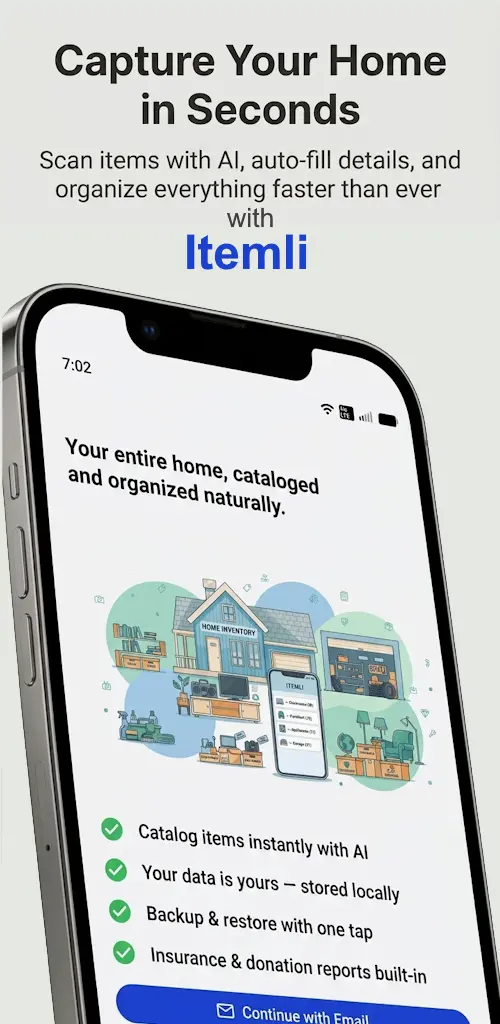
Rather than manually typing out spreadsheets of household goods (a process with too much friction to sustain), modern inventory management leverages computer vision.
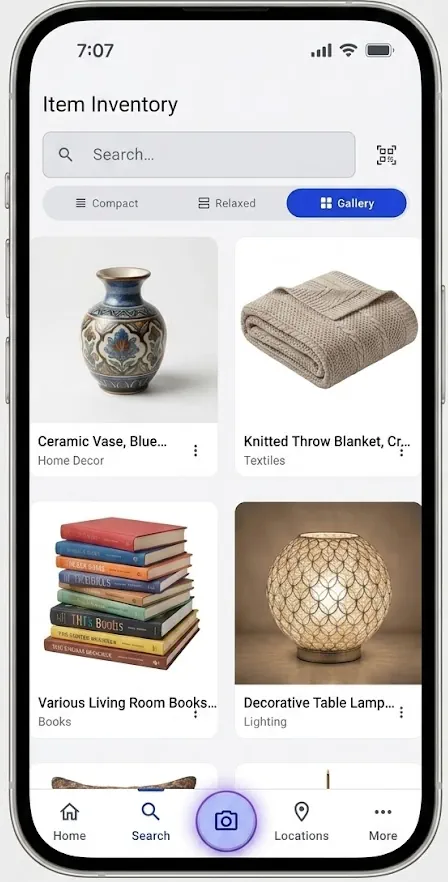
When we were engineering Itemli's computer vision engine, moving was one of our primary benchmark tests. We recognized early that if users had to manually type out every plate, book, or piece of furniture before packing a box, they'd give up within 10 minutes. Speed and frictionless indexing are what make pre-pack organization possible at scale. By utilizing AI-powered scanning, an entire room can be logged in minutes, with a smartphone camera pointed at a bookshelf, closet, or pantry allowing the system to automatically detect items, extract details, and categorize them instantly. This creates a clean, digital snapshot of all physical assets while they're still in their native environments, providing absolute clarity before the physical disruption begins.
2. Logistical Routing: Batch Assigning to Rooms and Containers
Once a home's items are digitized, they need to be routed to their future destinations. In a standard move, this requires stopping at every individual item and making a micro-decision about where it belongs, leading to decision fatigue and slowed momentum.
A streamlined workflow separates cataloging from routing. With a digitized inventory, items can be sorted programmatically in batches rather than one by one. This routing happens across two critical layers: macro-locations (rooms) and deep-storage containers (boxes or bins).
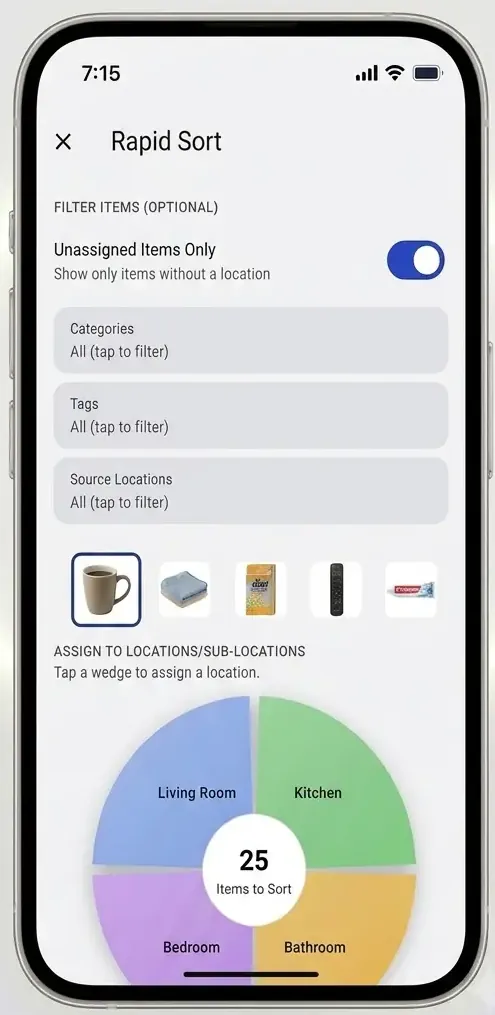
- Macro-Routing (Rapid Sort): Using an intuitive four-corner sorting dial, unassigned items can be filtered by tags or categories and mapped to their target rooms (e.g., Kitchen, Living Room, Garage) with a simple flick of a finger. By handling this digitally, every single item is assigned a definitive destination room before a physical box is even assembled.
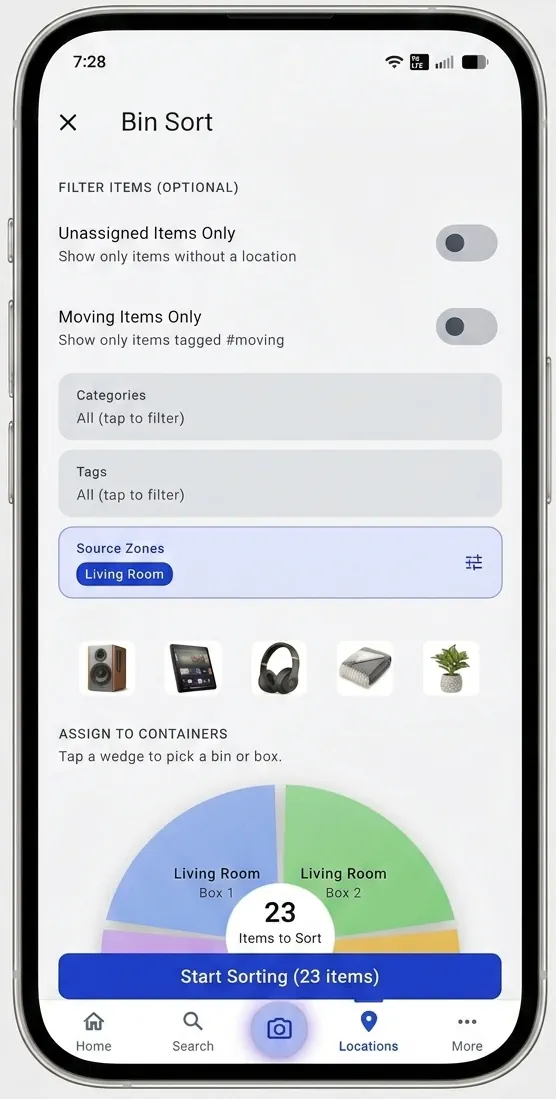
- Micro-Routing (Bin Sort): Once items are grouped by room, the workflow shifts to physical placement. The Bin Sort layer allows you to view items designated for a specific zone and instantly assign them to specific physical containers or boxes. This creates a nesting data structure: individual items belong to specific bins, and those bins belong to specific rooms.
3. Replacing the Sharpie with Smart Manifests
Writing "Kitchen / Misc" on the side of a box is an antiquating practice. It offers no granularity and forces individuals to tear open tape later just to find a single specific tool or appliance.
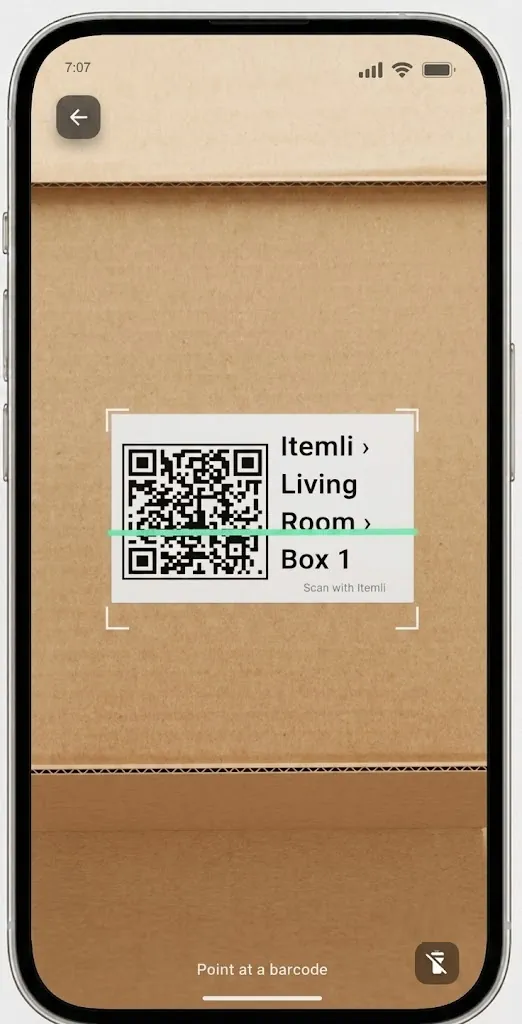
The modern alternative is the Smart Manifest, powered by unique, container-specific QR codes.
Instead of handwriting vague descriptions, a unique QR code is generated for each physical box or bin. When printed and applied to the side of the container, this code acts as a digital viewport. A single scan reveals:
- A visual gallery of every item inside the box.
- The original room of origin and its target destination.
- High-priority metadata tags (e.g.,
#Fragile,#OpenFirst).
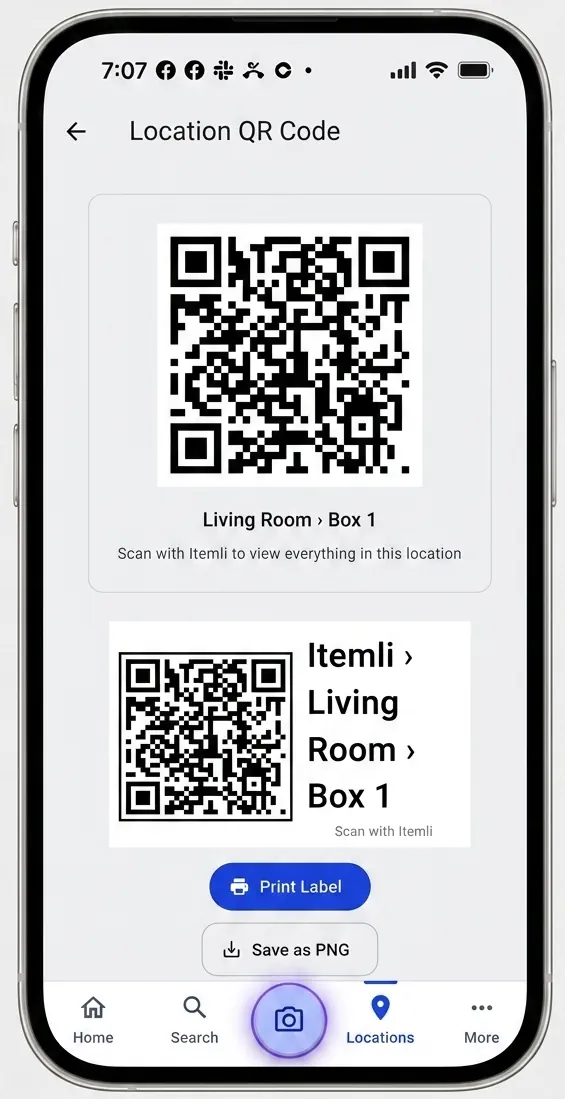
Logistical Tip: Always place QR labels on the sides of moving boxes, never on the top flaps. This ensures the codes remain perfectly readable even when containers are stacked high in a moving truck or staging area.
4. Zero-Friction Arrival: Unpacking by Exception
The true return on investment for a systemized inventory happens on arrival day. The typical post-move scramble involves a frantic search through dozens of boxes just to find essentials like phone chargers, bed linens, or coffee makers.
When an inventory is structured digitally, data retrieval replaces physical exploration.
Upon entering the new space, boxes do not need to be opened to verify their contents. A quick scan of the exterior QR code instantly dictates exactly which room the box belongs in and what is inside. If a specific item is needed immediately, a global search in the app points directly to the exact box holding it.
Unpacking shifts from a chaotic guessing game to a predictable, systematic process of unpacking by exception, handling only what is needed, exactly when it is needed.
Advanced Optimization: Automation Rules
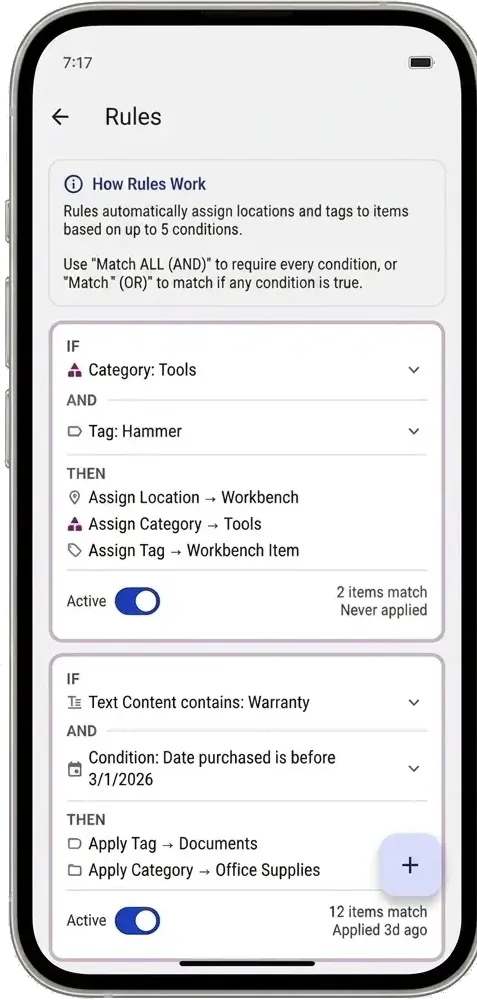
For those looking to entirely remove manual categorization fatigue, conditional logic can handle the heavy lifting in the background. Setting up simple automation rules within the inventory app ensures data consistency without manual oversight:
| Trigger Condition | Automated Action |
|---|---|
If Category is "Kitchen Appliances" | Auto-Assign Location to "Kitchen Pantry" |
If Tag is "Tools" | Auto-Assign Location to "Garage Workbench" |
If Title contains "Documents" | Auto-Assign Tag to "#HighPriority" |
Conclusion: Absolute Asset Visibility
Moving does not inherently have to be chaotic; it is simply an environment suffering from a lack of data structure. By transitioning to a local-first, privacy-focused digital inventory system, you gain complete operational control over your physical belongings.
When everything is labeled, searchable, and accounted for, the friction of moving entirely disappears. For your next transition, leave the Sharpie behind, embrace a systemized workflow with Itemli, and experience the efficiency of a move driven by absolute clarity.
Ready to streamline your next move? Download Itemli on Google Play and transform your move into a data-driven operation.
Comments
Loading comments…