
July 9, 2026
The Psychology of Home Organization: Why Visibility Reduces Stress
You wake up and look around your bedroom. Clothes pile up on the chair. Books stack on the nightstand. The closet is a jumbled mystery. Before your day even starts, your mind is already processing dozens of minor frustrations—none of them conscious, but all of them taking up space in your cognitive budget.
This is the hidden tax of clutter: cognitive load. Every visible, unsorted, or "unknown" item in your environment is a micro-stressor competing for your brain's processing power. Researchers call this the "visual noise effect," and it silently drains focus, decision-making capacity, and emotional resilience throughout the day.
The reverse is equally powerful. When your surroundings are organized, indexed, and visually calm, your mind finds room to breathe. You make better decisions. You feel more in control. You recover energy faster.
Let's explore why visibility and structure matter so deeply to human psychology—and how tools like Itemli transform chaotic spaces into islands of calm through AI scanning, categorization, and digital indexing.
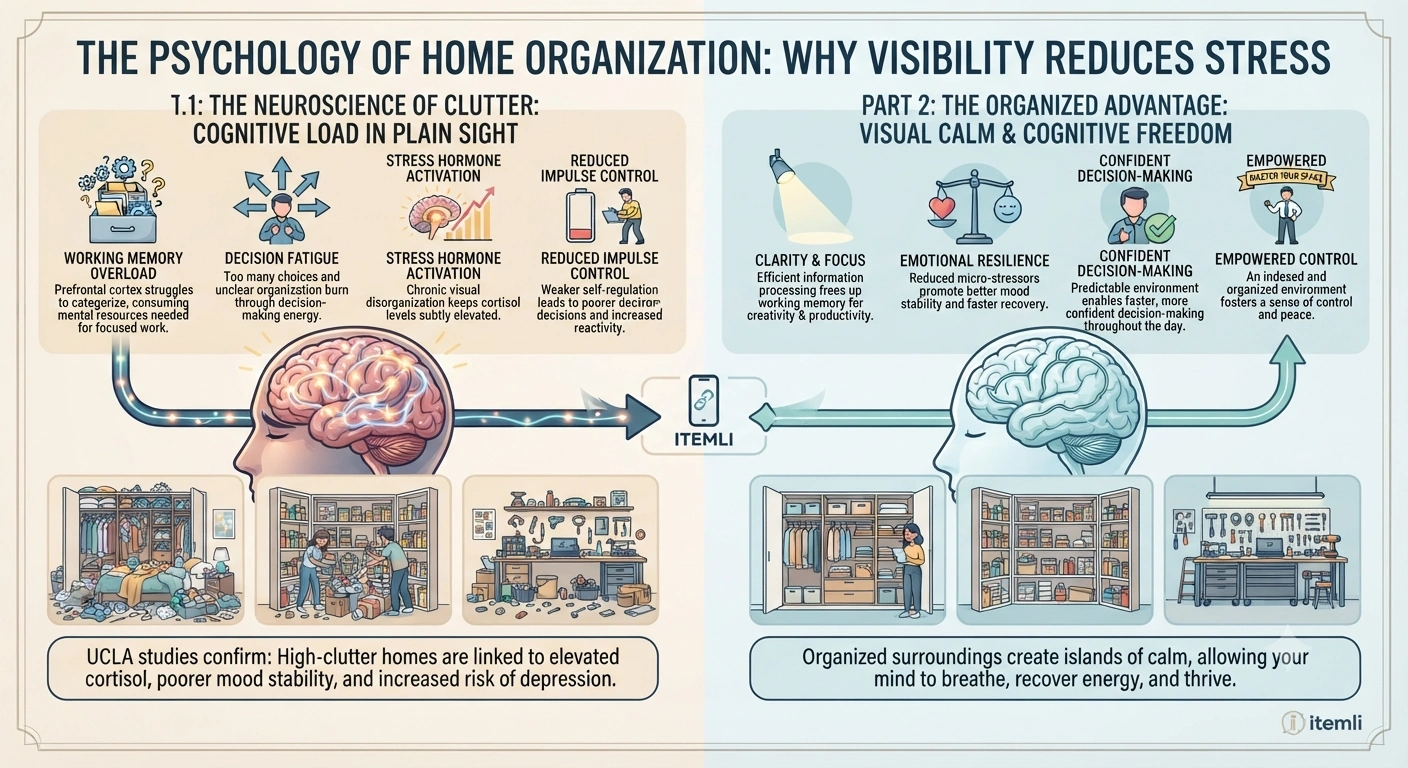
The Neuroscience of Clutter: Cognitive Load in Plain Sight
When you step into a disorganized room—a closet without clear sections, a pantry where you can't find basics, a garage where tools are scattered—your brain shifts into a kind of low-level crisis mode. It's not dramatic or obvious, but it's real.
Here's what happens at the neurological level:
- Working memory overload: Your prefrontal cortex tries to categorize and locate items visually, consuming the same mental resources you'd use for focused work or creative thinking.
- Decision fatigue: Faced with too many options and unclear organization, your brain burns through decision-making energy just deciding where to start looking.
- Stress hormone activation: Chronic visual disorganization activates your amygdala (the brain's threat-detection center), keeping cortisol levels subtly elevated throughout the day.
- Reduced impulse control: A depleted prefrontal cortex also means weaker self-regulation—you're more likely to make impulsive purchases or poor food choices when your mental energy is already stretched thin.
In studies conducted by UCLA's Center for Everyday Lives and Families, researchers found that participants living in "high-clutter" homes had elevated cortisol levels, poorer mood stability, and higher rates of depression compared to those in organized spaces.
Clutter isn't just aesthetically displeasing—it's psychologically damaging in measurable ways.
Why "Knowing What You Own" Matters More Than You Think
Closely tied to the cognitive burden of visual clutter is something deeper: epistemic anxiety—the psychological discomfort of not knowing what's true about your own environment.
If you open your pantry and there's no clear structure, you don't know:
- What staples you actually have on hand
- Whether you're about to run out of something essential
- How much money is tied up in duplicate purchases or forgotten items
- Which shelf holds what category of food
This uncertainty creates a psychological burden. You feel out of control in your own space. When you can't immediately answer "Do I have that?", you either:
- Waste mental energy searching and re-searching
- Give up and re-buy items you already own
- Feel a persistent low-level anxiety about your preparedness
The antidote is radical visibility. When you can instantly see everything you own, its condition, its category, and its location, something shifts psychologically. The anxiety dissolves. You feel equipped. You feel calm.
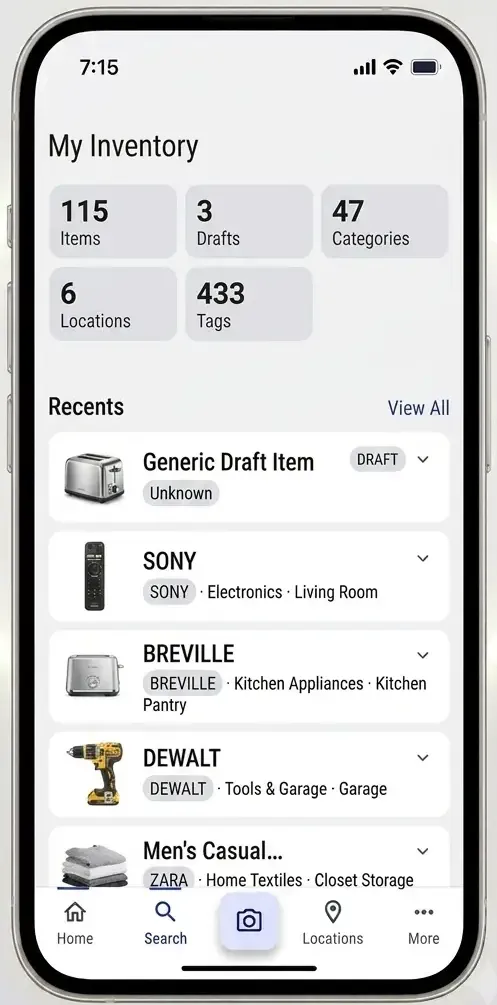
The Four Pillars of Psychological Calm: Structure, Predictability, Agency, and Competence
Home organization psychology rests on four fundamental human needs, identified by researchers in environmental psychology and organizational behavior:
1. Structure: The Brain's Preference for Patterns
Your brain is a pattern-recognition machine. It loves structure because structure means predictability, and predictability conserves energy. When you walk into a home with clear zones—a well-organized closet where tops are together and bottoms are together, a pantry where grains sit on one shelf and spices on another—your brain can immediately orient itself. Structure reduces the cognitive load of searching. It answers the question before your brain even has to ask.
2. Predictability: The Comfort of Known Patterns
Humans crave predictability because it reduces perceived threat. If you know that your kitchen scissors are always in the third drawer, you feel a tiny ping of calm each time you open that drawer and find them exactly where you expect. Conversely, if tools, clothes, or household items are in random places, your brain can never fully relax—it's always on alert, computing new location probabilities.
This is why digital organization systems are so powerful. They maintain consistent categories and locations even as your physical space evolves, giving your brain the same reliable predictability you'd get from a perfectly organized closet.
3. Agency: The Power to Act Without Friction
One of the most psychologically damaging aspects of disorganized spaces is the loss of agency. Consider the friction points:
- You want to prepare a meal, but the kitchen is cluttered—so you feel blocked instead of empowered
- You want to find seasonal decorations, but they're in an unmarked box—so you feel helpless
- You need to locate an item for a guest, but you can't find it quickly—so you feel incompetent
Organized, indexed spaces restore agency. You can act on your intentions without friction. This simple capacity to move from intention to execution seamlessly is deeply satisfying to the human psyche.
4. Competence: The Satisfaction of Mastery
Psychologist Mihaly Csikszentmihalyi's concept of "flow" requires a match between challenge and skill. When a space is disorganized, you're in chaos. But when you organize it, something profound shifts: you experience mastery.
That feeling doesn't fade. Every time you step into an organized space, you feel that quiet echo of competence: "I created this. I understand this. I can navigate this." It's a small victory that compounds.
How AI Scanning Transforms Invisible Chaos Into Visible Order
Traditional organization requires you to manually categorize, label, and track every single item. It's exhausting, which is why most people give up and let clutter accumulate.
When we built Itemli, our core insight was simple: the app's job isn't to create a pretty list—it's to completely offload the cognitive burden of remembering. If you have to hold mental space for "where did I put that?", we've failed. The brain should hand off the tracking entirely.
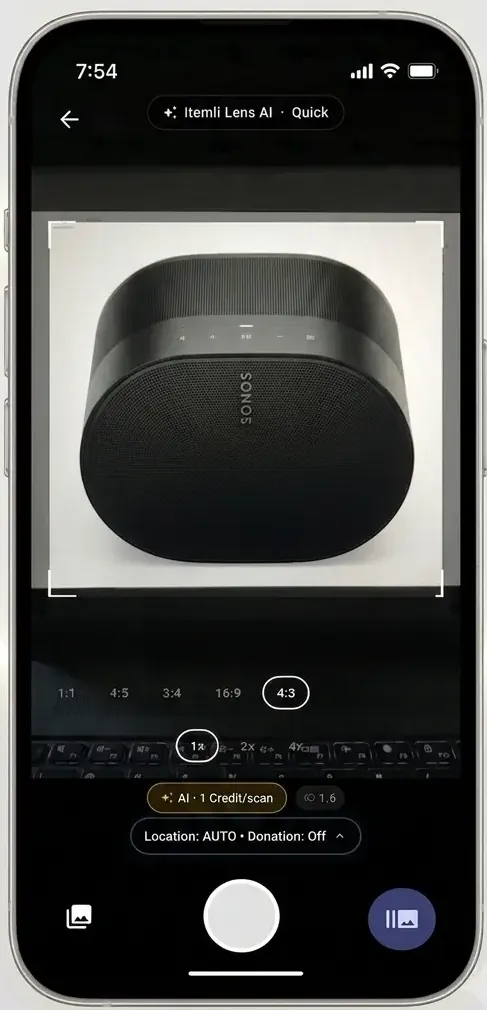
AI makes this possible. Modern image recognition can instantly scan items in a room or container and:
- Identify objects: The AI recognizes what you're scanning—a screwdriver, a winter sweater, a holiday ornament.
- Suggest categories: Based on the item, the AI proposes smart categories (tools, seasonal, kitchen, etc.) that your brain doesn't have to invent from scratch.
- Tag and contextualize: The system adds metadata (condition, priority, location) that makes retrieval instant.
- Reduce manual labor: Instead of handwriting labels for 200 items, you take a photo and let the system do the taxonomy work.
This is psychologically transformative because it removes the most painful part of organization: the up-front cognitive work of categorization. You get the benefits of organization without the friction that usually derails the process.
Location Hierarchy: Spatial Indexing as Mental Scaffolding
Your brain stores memories using spatial context. The "method of loci"—an ancient memory technique—exploits this by mentally walking through familiar spaces and placing ideas in specific locations. The same principle applies to home organization.
When Itemli lets you build a hierarchical location structure—Home → Bedroom → Closet → Hanging Clothes → Winter Jackets—you're creating a mental scaffold that aligns with how your brain naturally navigates space.
This hierarchical structure provides:
- Spatial intuition: When you need something, you can mentally navigate to it just like you'd navigate to a room in your house.
- Context clues: The nested hierarchy provides context that helps you remember where items are without conscious effort.
- Reduced decision paralysis: Instead of "where should this go?", the location hierarchy suggests natural places, making organization decisions feel less arbitrary.
The psychological effect is subtle but powerful: your digital inventory starts to feel as familiar and navigable as your actual home.
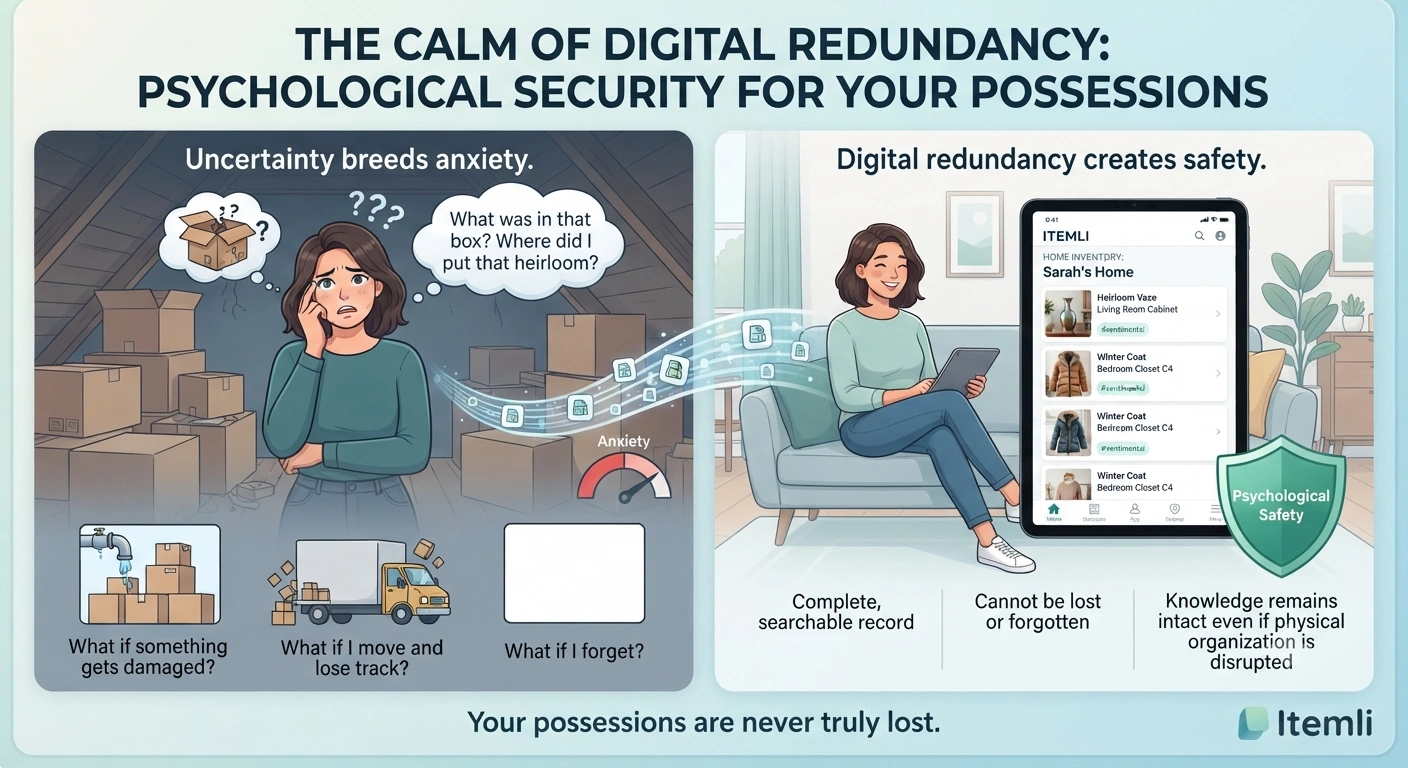
The Calm of Digital Redundancy
There's a particular kind of anxiety that comes from uncertainty about what might happen to your possessions. What if something gets damaged and you can't remember what was in that box? What if you move and lose track of items? What if you forget where you put something important?
A digital inventory acts as a kind of psychological insurance policy. Because every item is photographed and cataloged, you have a complete, searchable record that can never be lost or forgotten.
This creates a profound sense of safety. You can relax knowing that even if the physical organization gets disrupted, your knowledge of what you own and where it is remains intact.
From Decision Fatigue to Decision Freedom
Decision fatigue is real. Every small choice depletes the same mental resource—your decision-making energy. Researchers estimate we make 35,000 decisions per day, most of them unconscious.
Unorganized spaces multiply this burden by forcing you to make micro-decisions:
- "Where did I put my keys?"
- "Do I already have this in a box somewhere?"
- "Where should I store this new item?"
- "Which box was I looking for again?"
A well-organized, digitally-indexed home eliminates these micro-decisions. The system answers them for you. And because your decision-making energy is no longer drained by household logistics, you have more mental resources available for the decisions that actually matter: work, relationships, creative pursuits, and personal growth.
The Lasting Psychological Impact: Confidence and Calm
Perhaps the deepest psychological benefit of home organization is what researchers call "environmental mastery"—the sense that you understand and can effectively manage your surroundings.
People with high environmental mastery report:
- Lower anxiety and stress levels
- Better sleep quality
- Improved mood and emotional resilience
- Greater confidence in other areas of life
- Enhanced sense of control and agency
The beauty of using AI-powered organization tools is that they compress the path to environmental mastery. Instead of spending months slowly organizing, you can achieve results in days or weeks. The psychological benefits compound quickly: each organized zone reinforces the feeling of control, which motivates further organization, which deepens the sense of calm.
Restore Psychological Calm Through Visibility
Your home is not just a physical space—it's a psychological environment. The clutter you live with doesn't just affect your surroundings; it affects your brain, your mood, and your ability to function at your best.
By introducing structure, visibility, and digital indexing into your home, you're not just organizing objects. You're reducing cognitive load, eliminating epistemic anxiety, restoring agency, and building environmental mastery.
Ready to experience the psychological calm that comes with total visibility? Download Itemli on Google Play today and transform your home into an organized, indexed space that supports your mental well-being and peace of mind.
Comments
Loading comments…