
July 7, 2026
The Architecture of Clutter: How a Structured Inventory Restores Control Over What You Own
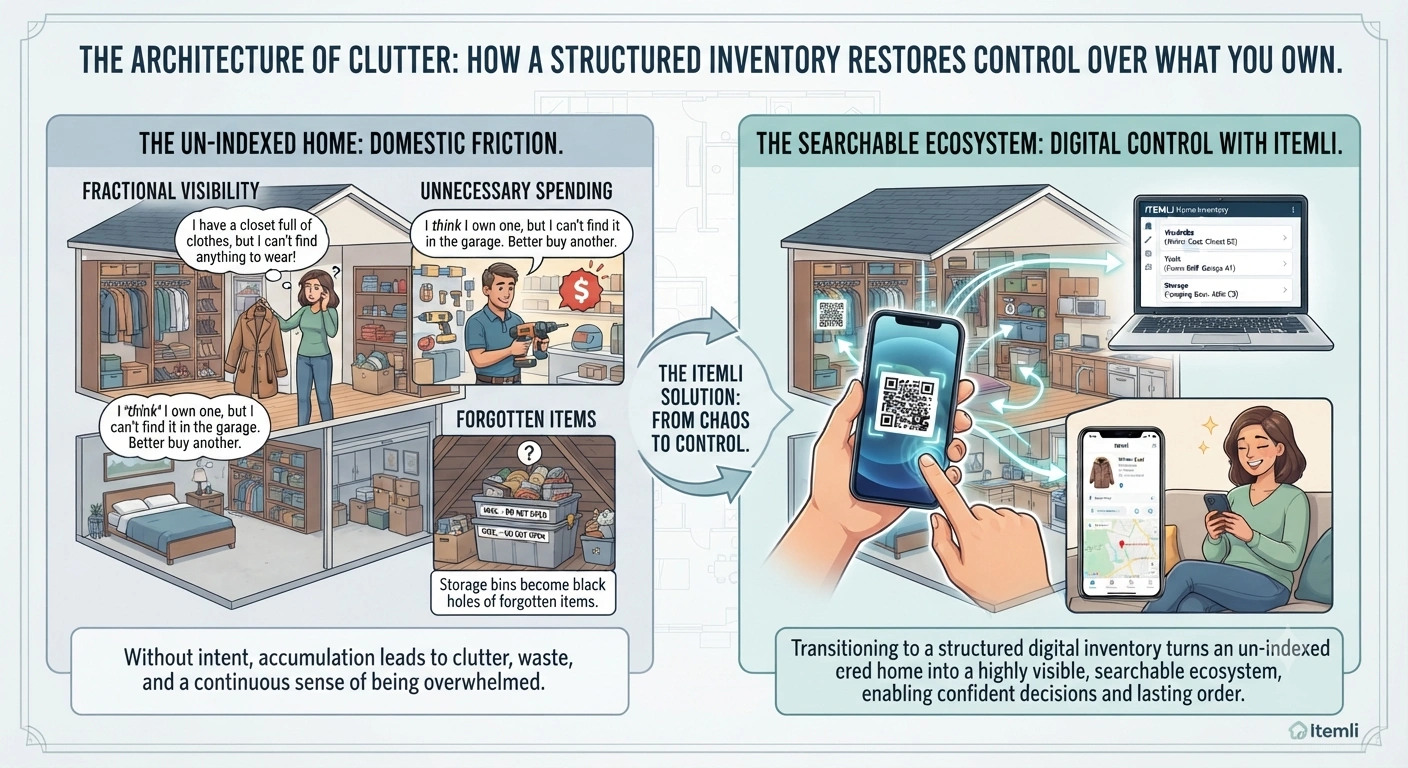
The modern home is increasingly burdened by an inventory problem. Without intent, closets fill with unworn wardrobe pieces, garages accumulate duplicate sets of tools, and storage bins become black holes of forgotten items.
This accumulation isn't just a space issue; it is a data issue. When you cannot easily query what you own, you default to a state of domestic friction: fractional visibility, unnecessary spending, and a continuous sense of physical clutter.
Restoring order requires moving past temporary tidying trends and embracing a systemic solution. By transitioning to a local-first, structured digital inventory using an application like Itemli, you turn an un-indexed home into a highly visible, searchable ecosystem.
1. Radical Visibility: Knowing Exactly What You Own
The baseline cause of home clutter is a lack of indexing. Items hidden behind cabinet doors or tucked away in basement bins practically cease to exist in your day-to-day awareness.
The traditional remedy—manually logging items into spreadsheets—introduces too much friction to sustain. True asset management relies on removing entry barriers through computer vision.
When building Itemli, we recognized early that if cataloging your belongings felt like a chore, adoption would stall immediately. That's why we engineered the system around computer vision from day one—enabling an AI to parse an entire room or shelf in seconds, automatically detecting items and generating a clean digital baseline without manual data entry. Friction is the enemy of adoption, and removing it transforms inventory management from a burden into an effortless background process.
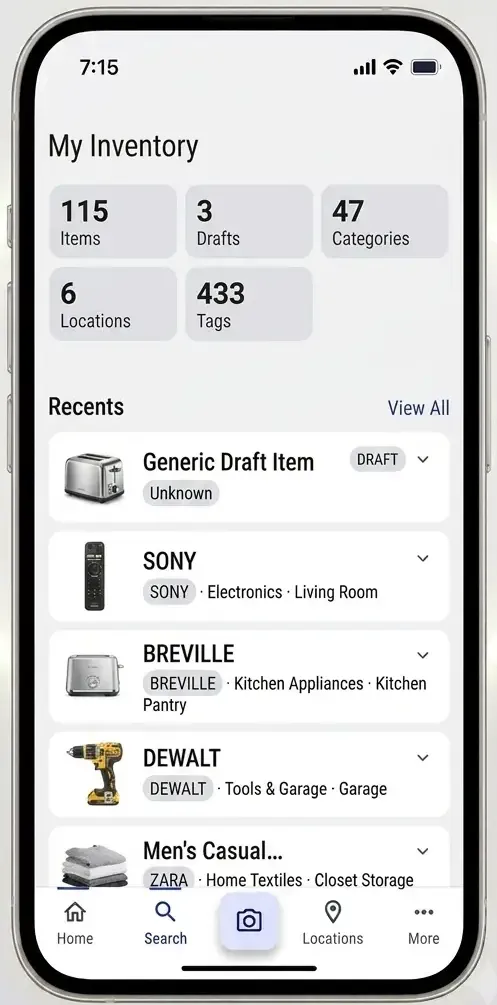
- Frictionless Capture: By utilizing AI-powered scanning, an entire room can be logged in minutes. Pointing a smartphone camera at a wardrobe, kitchen pantry, or storage shelf allows the system to automatically detect items, extract details, and generate a clean digital baseline.
- Instant Querying: Once your physical assets are digitized, finding an item shifts from a physical hunt to a digital search. Whether you are looking for a specific seasonal jacket or a niche electronic cable, a global search points you directly to its exact location.
2. Preventing the "Double Buy" Financial Drain
Have you ever purchased a tool, a specific kitchen gadget, or a set of hardware supplies, only to find the exact same item buried in a drawer weeks later?
This "double buying" habit is a direct tax on disorganized spaces. When the friction of searching for an item exceeds the cost of re-purchasing it, waste occurs.
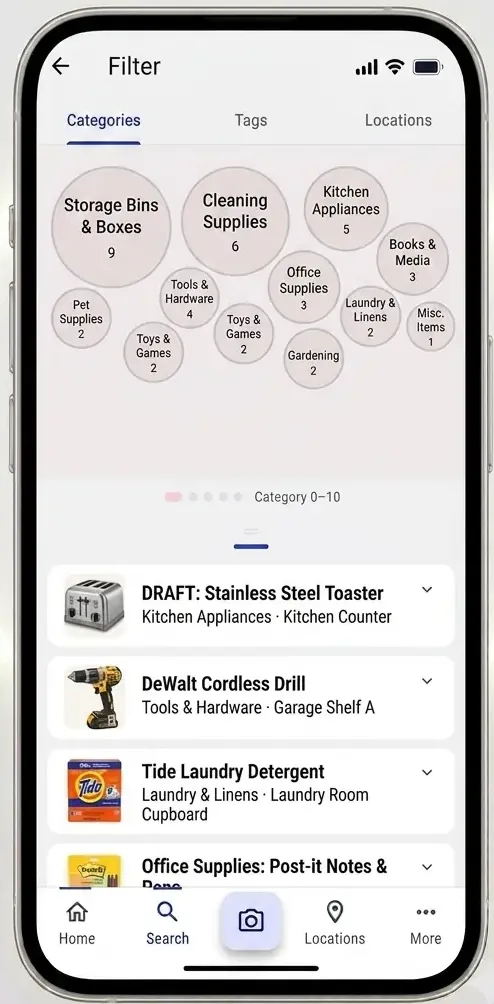
By keeping a precise digital manifest of your garage, pantry, and toolsets, you can audit your inventory instantly while standing in the store aisle. A quick check of your app confirms whether you already own the asset, immediately putting an end to duplicate purchases and keeping unnecessary items from entering your home.
3. Systematic Clutter Reduction and Asset Pruning
Clutter thrives on ambiguity. We hold onto objects we don't use simply because they are mixed in with the things we do use.
A digital database allows you to separate your items logically without needing to physically tear apart your rooms. By utilizing smart sorting systems like Rapid Sort and Bin Sort, you can categorize your items with complete precision.
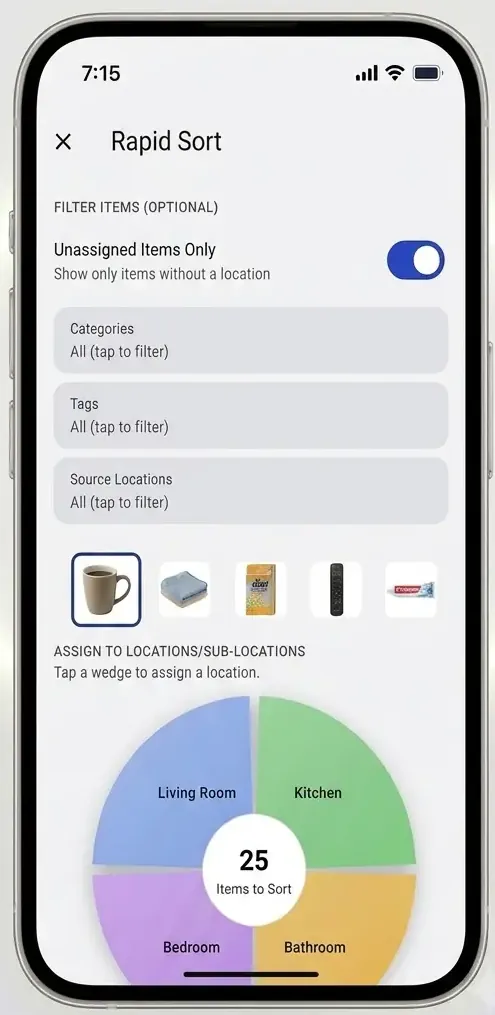
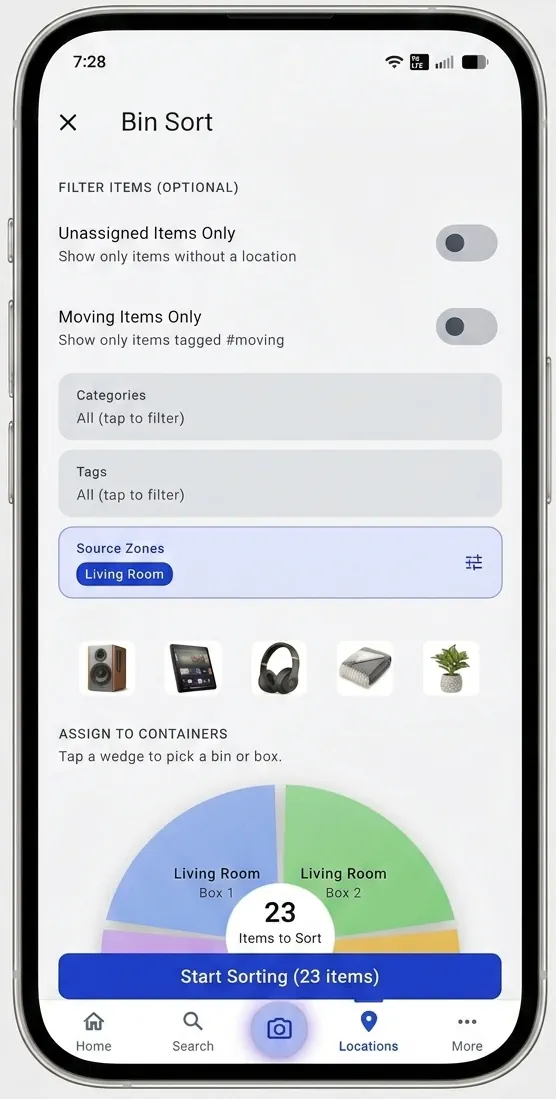
- Macro-Sorting (Rapid Sort): Group items instantly into their designated rooms or macro-zones using an intuitive four-corner sorting dial.
- Micro-Sorting (Bin Sort): Drill down further by nesting items into specific storage containers, boxes, or shelves.
Once your items are fully mapped, identifying underutilized assets becomes effortless. You can quickly filter your inventory to isolate items that haven't been touched in months, making it simple to systematically prune, donate, or sell off the clutter that is holding your space back.
4. Wardrobe Optimization: Maximizing Your Apparel Investment
The average closet suffers from poor asset utilization. We routinely wear a small fraction of our clothes while the rest remains hidden from view, leading to the common illusion of "having nothing to wear."
An inventory system brings a technical standard of efficiency to your wardrobe. By cataloging your dresses, suits, shoes, and seasonal wear into clean visual galleries, you transform your closet from a mental puzzle into a transparent asset map. Tag items by style, season, or occasion—#Formal, #Summer, #Workwear—and suddenly assembling outfits becomes a digital exercise rather than a frustrating hunt through hangers.
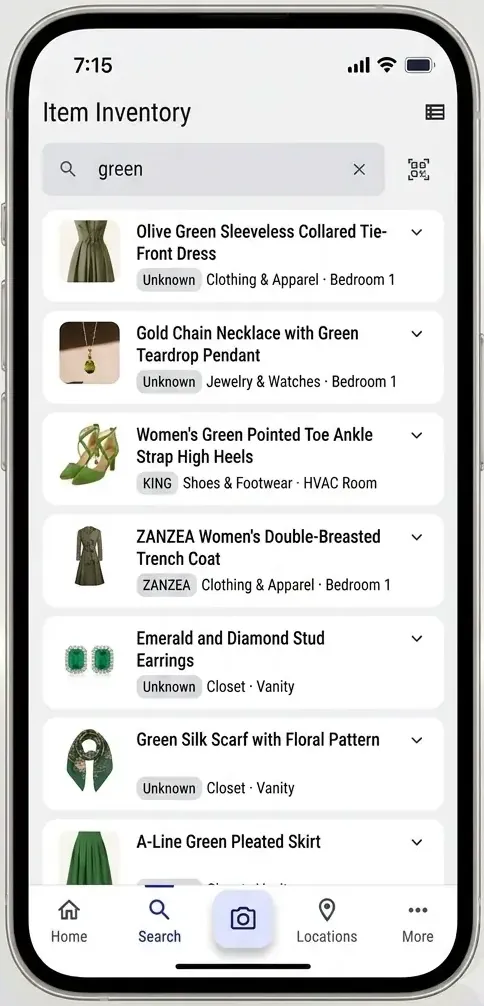
The real value emerges when you see your entire wardrobe as a clean digital grid. Gaps in your style become immediately obvious, preventing you from buying the same blazer or pair of shoes in three slightly different shades. Intentional curation replaces the cycle of redundant purchases, transforming your clothing investment into a lean, purposeful collection that works harder for you.
5. Moving & Storing with Smart Manifests
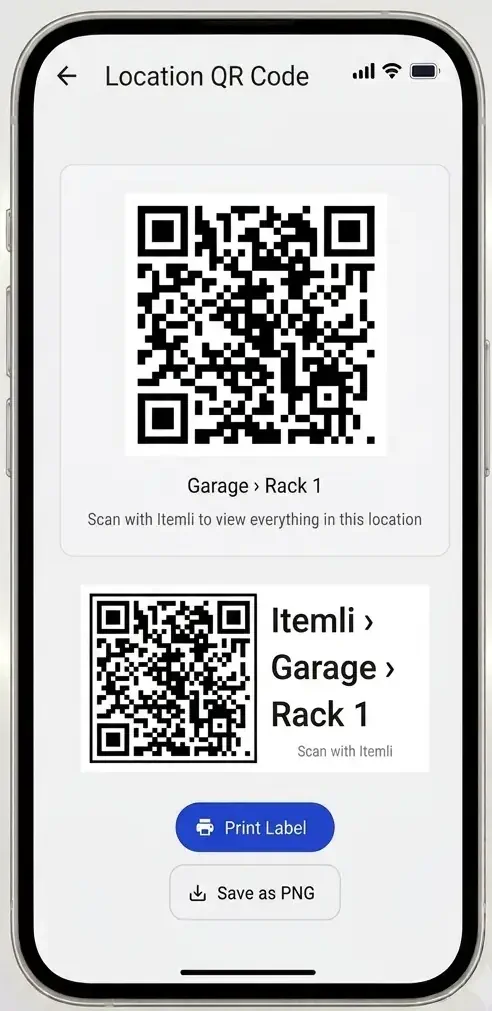
When items do need to be packed away—whether for a seasonal rotation or a full household move—the systemized approach replaces chaotic, handwritten labels with Smart Manifests powered by unique, container-specific QR codes.
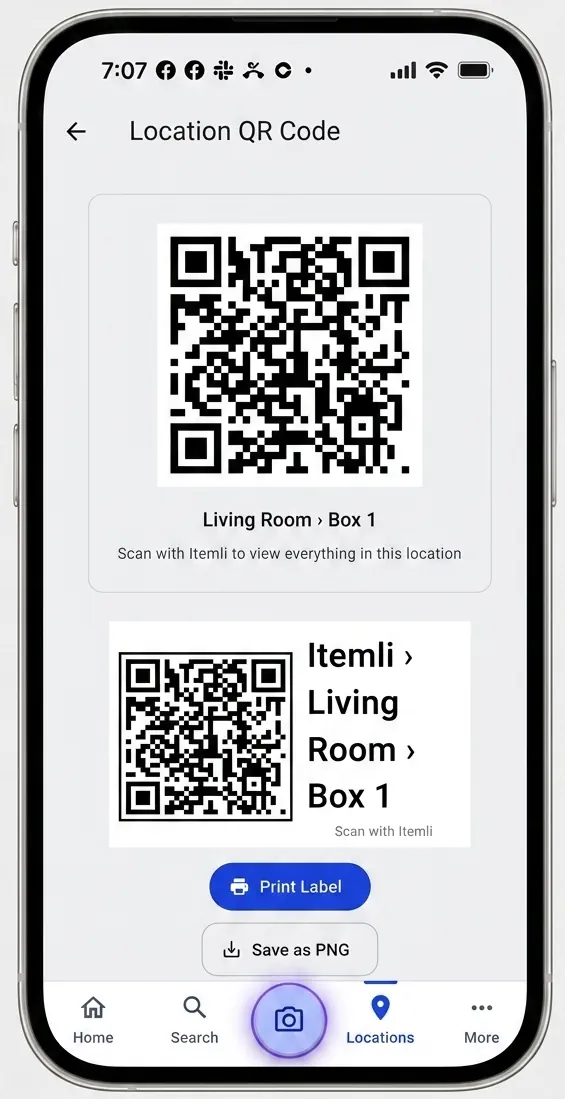
Instead of handwriting vague descriptions on boxes or storage bins, a unique QR code is generated for each physical container. A single scan of the exterior label reveals a visual gallery of every item inside, its room of origin, and high-priority metadata tags (e.g., #Fragile or #HighPriority) without forcing you to unseal or dig through the box.
Advanced Optimization: Automated Household Flow
To completely eliminate manual sorting fatigue, you can leverage conditional logic to handle asset management in the background. Setting up simple automation rules ensures your home inventory stays perfectly organized without continuous manual effort:
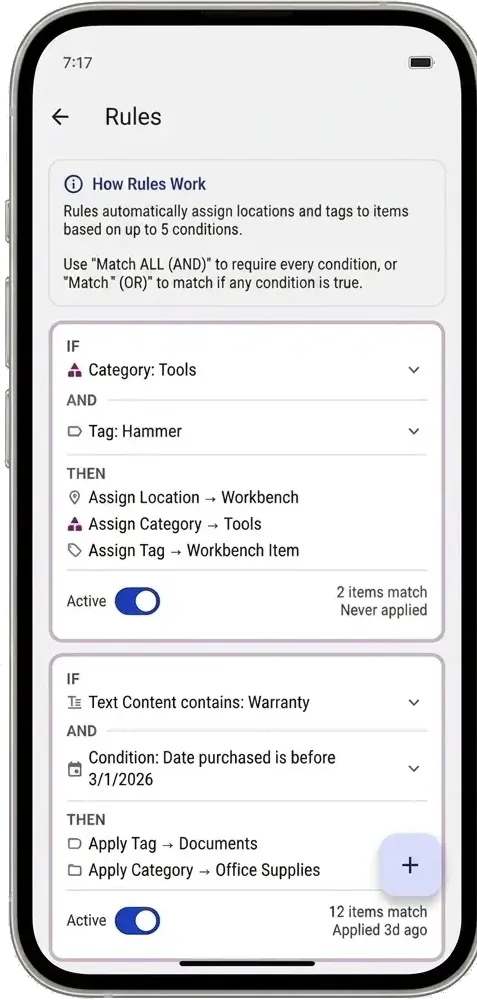
| Trigger Condition | Automated Action |
|---|---|
If Category is "Winter Wear" | Auto-Assign Location to "Attic Storage Bin B" |
If Tag is "Power Tools" | Auto-Assign Location to "Garage Workbench" |
If Title contains "Warranty" | Auto-Assign Tag to "#HighPriority" |
Conclusion: Transition to an Organized Lifestyle
A cluttered home is simply an environment suffering from a lack of data structure. True organization isn't about throwing things away haphazardly; it's about establishing complete operational control and absolute visibility over your belongings.
When everything you own is labeled, searchable, and accounted for, the anxiety of clutter entirely disappears. Step away from the guessing games, streamline your living space with Itemli, and experience the mental clarity of a perfectly systemized home.
Ready to reclaim control of your space? Download Itemli on Google Play and transform your home into an organized, searchable system.
Comments
Loading comments…